
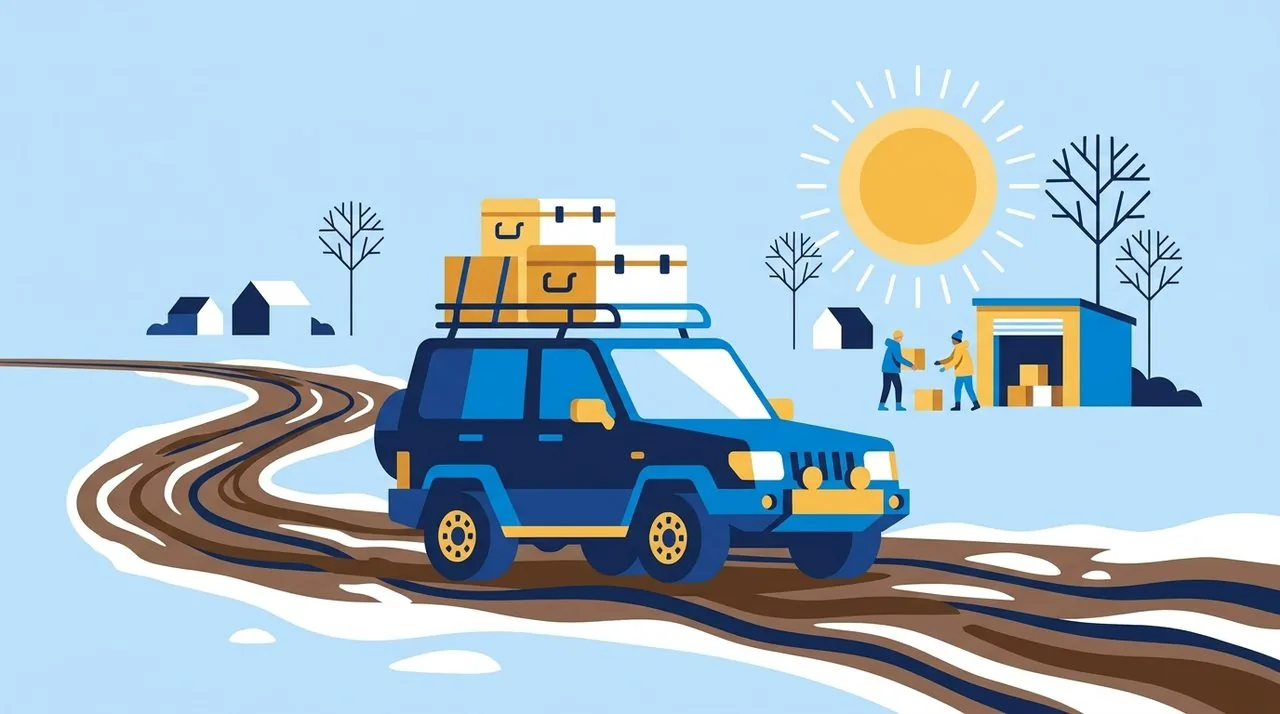
Winter off-road conditions and damaged routes turn the delivery of medicines into a logistical challenge.
January traditionally brings sharp temperature fluctuations, heavy snowfalls, and black ice to Ukraine. For remote and de-occupied communities, where bridges remain destroyed and asphalt pavement is critically damaged, these weather conditions mean almost complete physical isolation. Roads that could be covered in an hour during the summer turn into impassable routes in winter, requiring hours-long detours. Under such conditions, usual supply chains are broken, and the basic needs of the civilian population suffer first, particularly regular access to pharmaceutical products.
The problem of providing medicines in isolated areas has a profound humanitarian and demographic dimension. These villages and towns are mostly inhabited by older people who refused or were unable to leave their homes. Most of them have a whole spectrum of chronic diseases. Cardiovascular pathologies, arterial hypertension, thyroid dysfunction, and diabetes mellitus require regular, daily medication. Interrupting maintenance therapy for even a few days can cause a sharp exacerbation of their condition. In the absence of access to emergency medical care and inpatient treatment, the lack of a usual pill becomes a matter of survival.
Commercial pharmacy chains, according to specialized experts, are restoring their operations in remote settlements extremely slowly. This is due to high logistical risks, staff shortages, and the lack of guaranteed power supply for storing medications. Consequently, the burden of providing civilians with vital medicines falls entirely on humanitarian organizations, which are forced to design and build alternative medical distribution systems in conditions of constant uncertainty.
Infrastructure Gaps
The lack of permanent crossings forces the use of unpaved detour routes. During winter thaws or heavy snowfalls, they become inaccessible to standard medical transport.
Temperature Regime
Many medications require strict adherence to a temperature corridor. Transportation in unheated truck beds or prolonged exposure to freezing temperatures during delays completely destroys their efficacy.
Information Deficit
Due to communication interruptions in remote communities, it is difficult to gather current needs. Without proper coordination, shipments are assembled blindly, leading to a shortage of critical medicines.
Chronic Need
Medical support is not a one-time event. Patients need their supplies replenished monthly, which requires logisticians to create stable, recurring delivery schedules.
Building Adaptive Supply Chains
To ensure medicines reach the end consumer on time, a multi-link dispatch system is required, one that takes into account both the specifics of pharmaceutical cargo and the volatility of winter routes. Modern humanitarian logistics is gradually abandoning the practice of direct, unsystematic delivery of boxes by large trucks straight to villages. Instead, a network of regional transit hubs is being developed, located on the borders of territories with relatively stable infrastructure.
At these intermediate warehouses, large batches of medicines undergo careful sorting. Specialists check the integrity of the packaging, verify serial numbers, and expiration dates. Then the cargo is broken down into smaller targeted packages intended for specific settlements or even individual patients. Special attention is paid to maintaining the cold chain. Medications sensitive to temperature changes are placed in special autonomous thermoboxes. These containers can maintain a stable microclimate for several days, protecting medicines from both overheating and freezing in case the vehicle is delayed on the road.
The Yellow-Blue Foundation is actively developing an adaptive medical delivery infrastructure. Our logistics system allows us to keep accurate records of medical cargo in warehouses and form optimal routes for their transportation. Thanks to the systematic recording of balances and needs, we coordinate the movement of medications so that they reach isolated communities in advance, guaranteeing the continuity of treatment for the most vulnerable groups of the population.
After the sorting stage, the most complex process comes into play — "last mile" logistics. Delivery from the regional hub to a specific rural outpatient clinic or temporary medical point is carried out using all-terrain vehicles. Planning such routes in winter requires practically round-the-clock monitoring of road conditions. Logistics coordinators gather operational information regarding the water level at temporary pontoon crossings, the condition of unpaved detours, and the thickness of the snow cover.
Thanks to the collected data, a flexible schedule is formed. If the main route suddenly becomes impassable, the dispatch system allows the crew to be quickly redirected to a safe alternative route. This minimizes transport downtime and ensures that isolated communities receive help without critical delays. An important component of this ecosystem is close communication with local medical professionals or social workers who have remained to work in the communities. They form precise requests in advance, focusing on the real medical histories of their patients. This approach completely eliminates chaotic supply and allows bringing exactly those medicines that stabilize people's conditions. Logistics becomes highly precise, turning the chaos of the off-road into a managed process of sustaining life.
Effective humanitarian logistics is measured not by the volume of cargo, but by the uninterrupted supply for those who cannot wait.Yellow-Blue Editorial Team